
New Austin
RECOVERY ARCHIVE
LOCATION DOSSIER: NEW AUSTIN
|
ARCHIVE: COALITION ARCHIVE |
FILE NO: LOC-154 |
STATUS: OPERATIONAL |
|
CLASSIFICATION: RESTRICTED |
LAST UPDATE: Y09-312 |
SECTOR: NEW AUSTIN |
STATISTICSTYPE: City-State |
|
TECH LEVEL: Pre-collapse early 2000’s |
|
POPULATION: 180,000 |
|
FOUNDED: y04-033 |
|
WALL HEIGHT: 60 ft |
SECURITY PROFILE
|
ENTRY POINT: Fortified Gates East/West—Secondary Gates North/South |
|
GOV STRUCTURE: Corporate Council |
|
SECURITY: CIVIL GUARD |
|
SURVEILLANCE: Drone Patrols |
DISTRICTS/ZONES
|
TECH HUB |
|
ADMINISTRATION |
|
CIVIL CORE |
|
INDUSTRIAL QUARTER |
SUBJECT SUMMARY
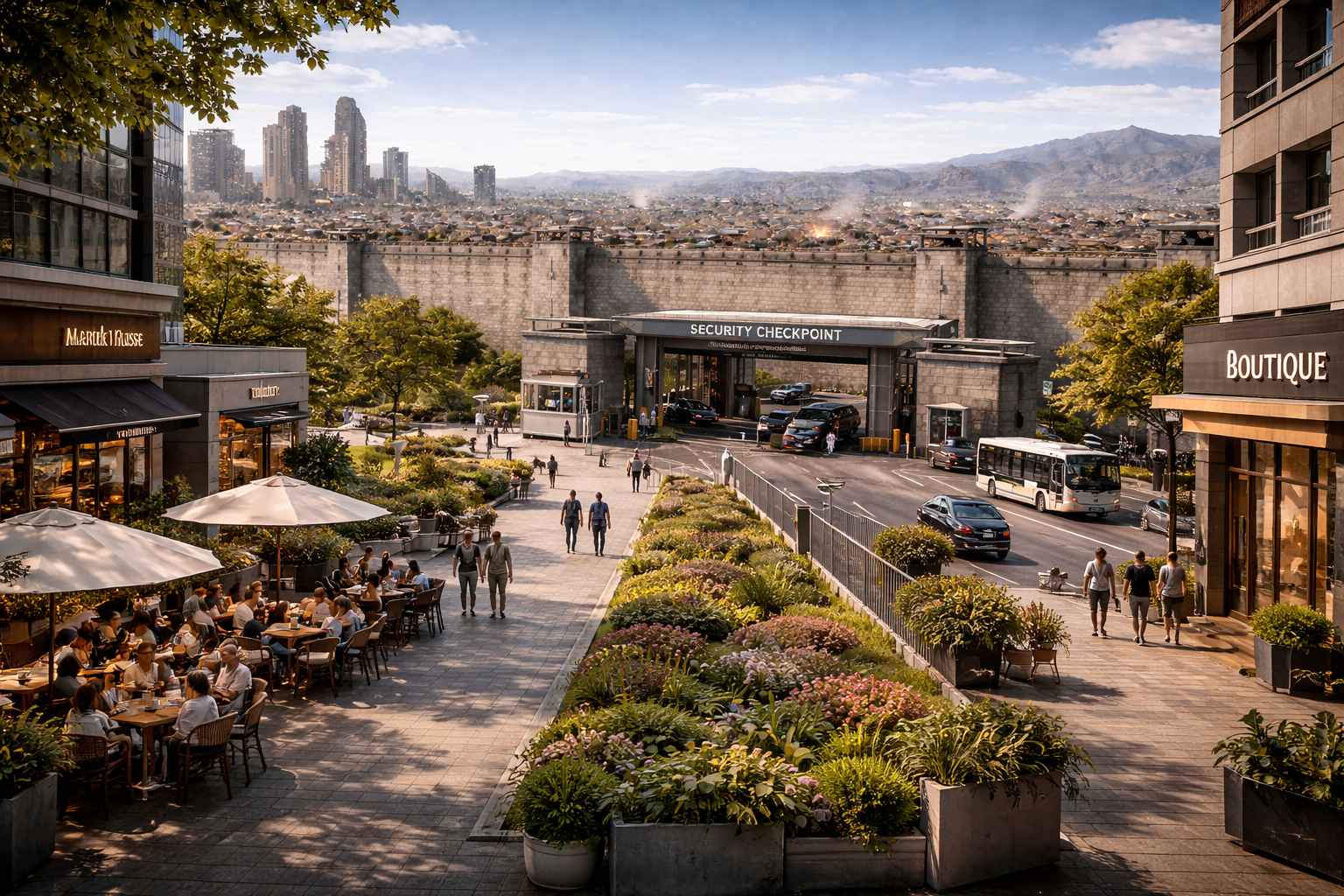
New Austin is the most progressive and advanced surviving city-state in what was once central Texas. Built from the ruins of old infrastructure in what was the Georgetown community north of Austin. The city is fortified and serves as a key trade hub for surrounding settlements.
ASSESSMENT
New Austin functions as the primary technology and manufacturing center in the region. The city preserved a large portion of pre-collapse infrastructure and rebuilt around it, restoring an industrial base roughly equivalent to early-2000s technological capability. Electronics fabrication, server infrastructure, rail logistics, and mechanical manufacturing operate at a scale not seen in surrounding settlements.
Political authority rests with the Council of Technology, a governing body composed of corporate leaders and engineering guild heads. The council operates less like a traditional government and more like a corporate board directing a controlled economy. Access to advanced technology, manufacturing tools, and technical education is tightly regulated. Licensing systems determine who may work with electronics, computing hardware, or fabrication equipment.
The council maintains strict control over technological diffusion beyond the city walls. Devices capable of advanced computation, encrypted communications, or precision manufacturing are restricted exports. This policy ensures that the Fringe settlements and outer communities remain dependent on New Austin for repairs, replacement parts, and technical services. Trade caravans and rail shipments are inspected heavily, and certain classes of components are never allowed to leave the city.
Internal stability is maintained through an extensive surveillance infrastructure. Autonomous drones patrol the city airspace continuously, providing both law-enforcement support and persistent monitoring. Public transit hubs, markets, and industrial sectors are saturated with networked cameras and sensor grids tied into centralized monitoring systems. Residents are accustomed to constant observation; deviation from expected behavior draws rapid attention from civil enforcement units.
Despite the rigid oversight, New Austin remains the most prosperous city-state in the region. Reliable power, functioning communications networks, and large-scale manufacturing attract traders and migrants from surrounding territories. This prosperity also reinforces the council’s authority: access to New Austin’s technology determines who holds power across much of central Texas.
The result is a city that outwardly resembles a restored modern metropolis, yet operates as a controlled technological enclave. New Austin does not simply trade technology. It governs the region by controlling who is allowed to possess it.
INCIDENT LOG
-
News Archive – The last Gas Station Closed
Aether Vehicle Dominance — Archived Report National Transportation Record The Automotive & Energy Review Detroit, Michigan · February 14 · Transportation & Industry Edition · Archived Report Transportation Aether Systems Industry The Last Gas Station Closed Six Months Ago. Nobody Much Noticed. With ninety-five percent of registered vehicles now running on Aether COR…